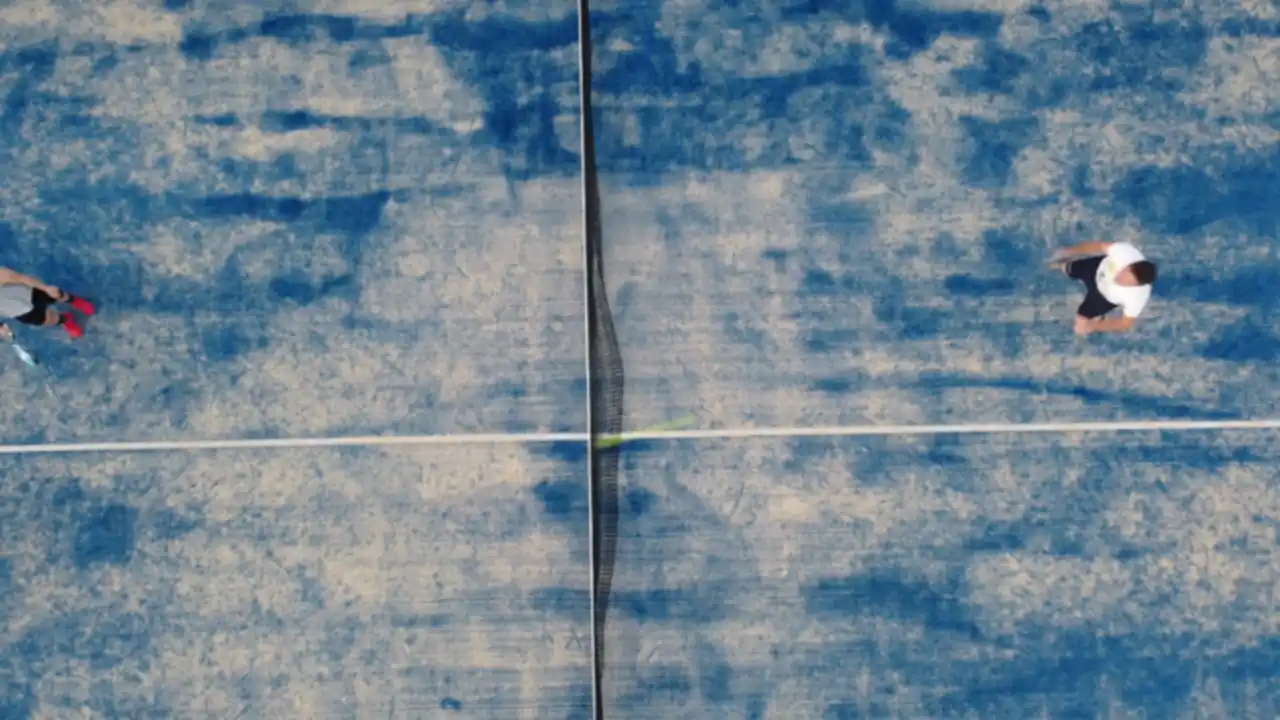
Know the game
What padel demands of your body
Padel looks gentle, but a typical match asks a lot of the body in a small space.
- Footwork
Short, explosive movements
Quick sprints to the net, sudden stops, lunges and changes of direction on a small court.
Demands: Calves, Achilles tendons, ankles and knees
- Defence
Low balls and the glass
Bending low to dig out balls and turning to play shots off the back and side glass walls.
Demands: Lower back, hips and knees
- Attack
Overheads
Smashes, bandejas and víboras played above the head, often many times a match.
Demands: Shoulders and the rotator cuff
- Equipment
A solid, stringless racket
Padel rackets are solid and do not absorb shock the way a strung racket can, so more of each impact reaches the forearm.
Demands: Forearm and elbow tendons
What adds to the risk in Cape Town
- Many players are new to the game, or returning to sport after years away, and build up court time quickly
- Hot outdoor courts in summer, and sand-filled artificial turf that can be slippery when worn or wet
- Social tournaments and back-to-back matches that pile up hours on court in a single day
What we see
Common padel injuries
Calf strain
Why: A sudden push-off or lunge, especially in players over 35 or after too little warm-up. Sometimes called 'tennis leg'.
Signs: A sudden sharp pain or 'kick' in the back of the calf, then pain walking or rising onto your toes.
Achilles tendon pain and rupture
Why: Repeated push-offs and sudden accelerations. Ongoing tendon pain builds up over time; a rupture usually happens during a quick change of direction.
Signs: Morning stiffness and pain above the heel (tendon pain), or a sudden 'pop' as if you were kicked in the heel, then difficulty pushing off (rupture). A suspected rupture needs to be seen within a day or two.
Read the tendon guideAnkle sprain
Why: Rolling the ankle on landing, while turning, or by stepping on a ball.
Signs: Pain, swelling and bruising on the outside of the ankle, and difficulty walking.
Knee pain and meniscus injuries
Why: Twisting on a planted foot, deep lunges, and a sudden increase in court time. Padel can also flare up existing knee osteoarthritis.
Signs: Pain on the inside or outside of the knee, swelling, catching or locking, or pain at the front of the knee after playing.
Read the knee pain guidePadel elbow
Why: Repeated gripping and impact through a solid racket, often with a racket or grip that doesn't suit you or a sudden increase in play. It is the same tendon problem as tennis elbow.
Signs: Pain on the outside of the elbow when gripping, lifting a kettle or shaking hands, which can last for months if it isn't managed.
Read the tendon guideShoulder pain
Why: Repeated overhead shots irritating the rotator cuff tendons, particularly when shoulder strength hasn't kept up with playing time.
Signs: Pain at the top or side of the shoulder when hitting overheads or lifting the arm, or pain lying on that side at night.
Lower back pain
Why: Bending low and twisting to play balls off the glass, often with limited hip and core strength.
Signs: Aching or sharp pain in the lower back during or after matches. Pain spreading down the leg needs assessment.
Eye and face injuries
Why: Being hit by the ball or your partner's racket at close range, especially at the net.
Signs: Eye pain, blurred or double vision, flashes or floaters, or a cut around the eye.
Eye injuries are an emergency
If the ball or a racket hits your eye and your vision changes, or you see flashes, floaters or blood in the eye, go to an emergency unit or eye casualty straight away.
Prevention
Reducing your risk on court
Warm up before you play
Spend five to ten minutes on dynamic movements, calf raises, lunges and shoulder work before rallying. Knocking up alone is not a warm-up for your calves and Achilles.
Build up court time gradually
If you are new to padel or coming back from a break, increase the number of matches each week steadily, and avoid long tournament days until you are used to the game.
Strength train off the court
Calf, hip, core and shoulder strength protects against the most common padel injuries, and matters more as you get older.
Wear padel or tennis shoes
Running shoes are built for forward motion, not side-to-side movement on turf. Shoes with a herringbone or omni sole give better grip and ankle support.
Check your racket and grip
A racket that is too heavy, head-heavy or very stiff, or a grip that is the wrong size, can add to elbow pain. A coach or pro shop can help you choose.
Protect your eyes and talk to your partner
Call your shots, take care at the net, and consider protective sports eyewear, especially if you have had an eye injury before.
Your recovery pathway
Getting you back on court
- 1With Dr. Ganda
Assessment and diagnosis
A full assessment with Dr. Janesh Ganda, with ultrasound, X-ray or other imaging where needed, a clear diagnosis, and referral to an orthopaedic surgeon if an injury needs it.
- 2With your rehab team
Rehabilitation
A structured rehab programme to restore movement and strength, usually with a physiotherapist or biokineticist, built around the demands of padel: footwork, lunges and overheads.
- 3Back on court
Return to padel
A graduated return, starting with drills and shorter games before full matches and tournaments, so the injured area is ready for the speed of the game.
Getting help
When to see a sports physician
Book an assessment if you have:
- A sudden pop or kick at the back of the heel or calf, especially if you can't push off or rise onto your toes
- A knee that swells, locks, catches or gives way
- An ankle sprain where you can't take four steps, or that is still painful and swollen after a week
- Elbow or shoulder pain that has lasted more than a few weeks or is getting worse
- Back pain with pain, numbness or pins and needles spreading down the leg
- Any injury that is stopping you from playing
Questions
Padel injuries: frequently asked questions
What are the most common padel injuries?
Most padel injuries affect the legs: calf strains, Achilles tendon problems, ankle sprains and knee injuries. Padel elbow (the same problem as tennis elbow), shoulder pain from overhead shots, and lower back pain are also common.
I felt a pop in my calf or heel playing padel. What should I do?
Stop playing and get it checked within a day or two. A sudden pop or the feeling of being kicked in the back of the heel can mean an Achilles tendon rupture, which is easy to miss if you can still walk. Early diagnosis matters, because the treatment options are best started early.
Is padel elbow the same as tennis elbow?
Yes. Both are lateral elbow tendinopathy, an overload problem of the tendon on the outside of the elbow. It usually settles with a period of modified play and a progressive strengthening programme, and racket and grip changes can help.
Is padel bad for your knees?
Not for most people. Padel can be a good way to stay active, including for many people with knee osteoarthritis. Knee problems usually come from twisting injuries or from increasing court time too quickly. If your knee swells, locks or gives way, get it assessed.
Can I keep playing padel with an injury?
Sometimes. Many overuse injuries can be managed by reducing how much you play, or changing how you play, while you rehabilitate. Others, like a suspected Achilles rupture or an unstable knee, need you to stop until they have been assessed. Your plan will set out what is safe.
When can I play padel again after an injury?
It depends on the injury. A mild ankle sprain or calf strain may take a few weeks, while an Achilles rupture usually takes many months. Returning through drills and shorter games first, before full matches, lowers the risk of re-injury.
What shoes should I wear for padel?
Padel or tennis shoes with a herringbone or omni sole, which grip artificial turf and support side-to-side movement. Running shoes are not designed for padel's sudden stops and changes of direction.
Where is the practice?
Dr. Janesh Ganda consults at the Sports Rehab Centre, 55 Scott Road, Observatory, Cape Town. Consultations can be booked via WhatsApp.